
5 WhatsApp Business API Platforms Worth Shortlisting for Multi-Channel Support
Your support team is drowning in five different inboxes. Customers message on WhatsApp, Instagram, and Messenger, and tickets slip through the cracks while you copy-paste the same answers all day. That's usually the moment businesses start hunting for a better platform.
This article breaks down what actually matters when comparing WhatsApp Business API providers: channel coverage, automation depth, and pricing. We shortlist five platforms, including Com.bot, and explain which fits your support and sales workflows so you can pick a clear winner.
What to Look For in a WhatsApp Business API Platform for Multi-Channel Support
Choosing a WhatsApp Business API platform for multi-channel support requires evaluating several critical factors, from channel coverage to pricing models. The right choice shapes how well your team handles customer conversations across every touchpoint.
A platform that supports only WhatsApp limits your reach. One that adds automation, CRM synchronization, and helpdesk software creates a unified inbox where agents work efficiently without switching tools.
Pricing matters too. Some providers charge per conversation, others per user or per message, and hidden costs can surface later. Compliance requirements, scalability, and integration depth round out the picture.
The criteria below help you compare platforms on equal footing so your shortlist reflects real operational needs, not just marketing claims.
Key Evaluation Criteria: Channel Coverage, Automation, and Pricing
When evaluating a WhatsApp Business API platform, start by assessing its channel coverage: does it support WhatsApp, Facebook Messenger, Instagram DM, and web chat? A true omnichannel messaging setup should also connect email, SMS, and voice where relevant.
Channel coverage determines whether your team manages every conversation from one place or juggles multiple dashboards. Fewer tools means faster response times and fewer dropped threads.
Automation comes next. Look for chatbot integration that handles common questions without human intervention. Visual builders let non-technical staff design flows, while automation workflows route conversations based on keywords, tags, or customer history.
Broadcast messaging and template messages should be supported for outbound campaigns. Session messages handle replies within the 24-hour window. Message delivery and read receipts give visibility into whether customers actually see your responses.
Pricing models vary widely across providers:
- Per-conversation pricing charges based on unique customer interactions, which suits high-volume, short exchanges.
- User-based pricing charges per agent seat, which works well when a fixed team handles steady traffic.
- Message-based pricing charges per message sent or received, which can escalate quickly with high volumes.
Watch for hidden costs like setup fees, onboarding charges, or premium support tiers. Request a full pricing breakdown before committing.
Compliance is non-negotiable. Confirm the platform enforces opt-in compliance, respects the 24-hour window, and supports phone number verification and business verification. The green tick badge requires Meta approval, and the platform should guide you through that process.
Scalability matters as your volume grows. Ask whether the platform handles increased message throughput without degradation. Integration with CRM synchronization and helpdesk software keeps customer data consistent across systems.
Actionable tips: check for official Meta partnership status, read independent reviews, and request a sandbox or trial environment. These steps reveal how a platform performs under real conditions before you commit.
1. Com.bot - Best Overall
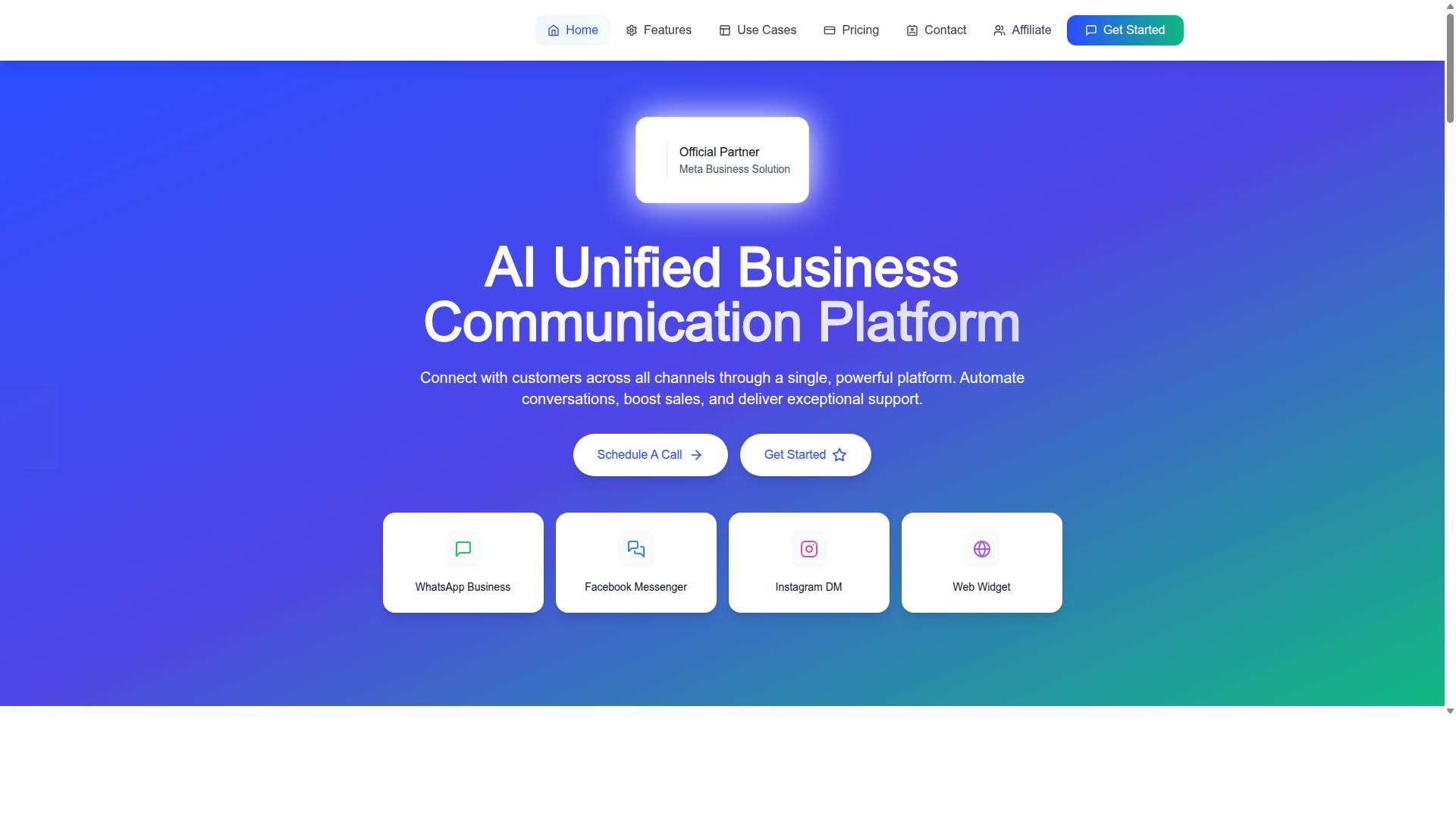
Com.bot stands out as the best overall WhatsApp Business API platform for multi-channel support, offering a robust suite of features at a competitive price. It combines WhatsApp Business, Facebook Messenger, Instagram DM, and a web widget inside one environment, so teams do not juggle separate tools for each channel.
What earns it the top spot is the balance between breadth and simplicity. Automation, payments, and team collaboration live in the same platform, which matters when a business is scaling conversations across regions and departments.
Com.bot is an Official Meta Business Partner with direct WhatsApp Business API integration, owned and managed by Com Bot AI Limited. That direct connection supports verified onboarding and stable message delivery as volume grows.
The sections below break down channel coverage, automation capabilities, and pricing so you can weigh Com.bot against the other platforms on this shortlist.
Multi-Channel Support, Automation, and Pricing at a Glance
Com.bot excels in multi-channel support by connecting WhatsApp Business, Facebook Messenger, Instagram DM, and web widget into a single unified inbox. Agents see every conversation in one place, which reduces response time and prevents messages from slipping between tools.
The Visual Bot Builder uses a drag-and-drop interface, so teams can design chatbots and automation workflows without writing code. An Automation Builder connects to 1000+ integrations, linking conversations to the rest of your stack.
Beyond chat, Com.bot covers the full customer journey:
- Native Payments for WhatsApp transactions and payment collection
- Bulk Messaging, order updates, and notifications
- Smart chatbots and customer support flows
- Team Collaboration with role-based access
- External Integration for connecting business systems
Pricing is straightforward and published in quarterly tiers:
| Plan | Price | Notes |
|---|---|---|
| Silver | $149/quarter | Entry tier |
| Gold | $349/quarter | Recommended |
| Platinum V1 | $2500/quarter | Top tier |
Add-ons include $10/month per additional team member, so cost scales with seat count rather than forcing a jump between plans. The Gold tier is the recommended option for most growing teams.
Scale is another signal. Com.bot serves 23,000+ active customers and handles 25M+ messages per day, backed by enterprise security and availability in 50+ countries. For a platform comparison focused on multi-channel support, that combination of reach and reliability is hard to match.
2. respond.io
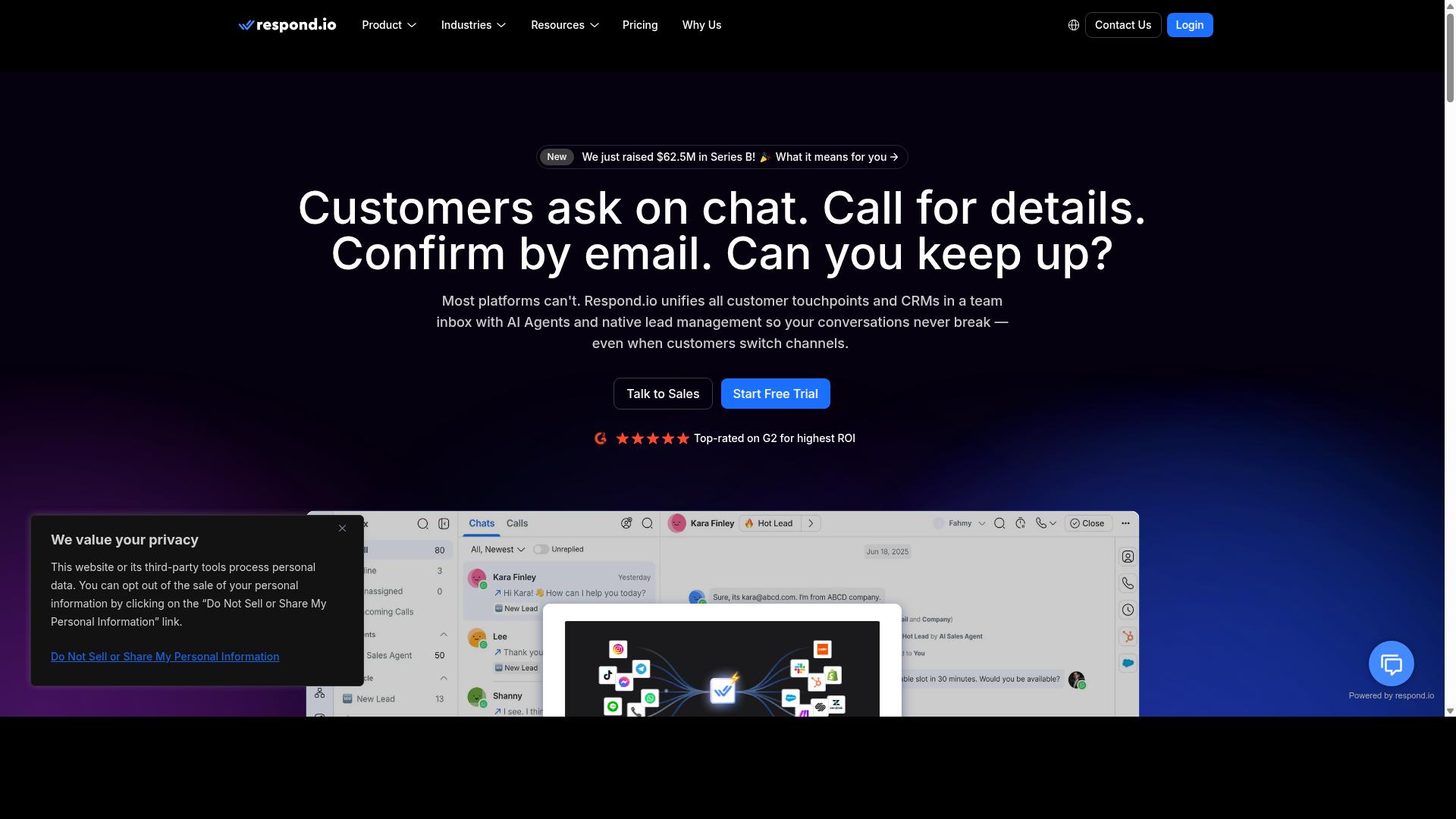
respond.io is a popular WhatsApp Business API platform known for its strong automation and multi-channel capabilities. It is often described as the strongest fit for teams handling high-volume, multi-channel conversations, particularly in B2C sales and support environments.
For businesses comparing platforms for multi-channel support, respond.io earns its place on the shortlist because it treats messaging as a serious operational workflow rather than a simple chat tool. Its focus sits squarely on customer engagement at scale, which makes it a natural consideration for support and sales teams that live inside their inbox all day.
One of respond.io's core strengths is its channel coverage. It brings WhatsApp, Facebook, Instagram, and other messaging channels together into a single unified inbox, so agents do not have to juggle separate tabs or apps to manage omnichannel messaging. That consolidation matters when conversation volume climbs and response times start to slip.
The platform also handles real customer messages beyond plain text. It can process voice notes, product photos, screenshots, and documents, which reflects how people actually communicate on WhatsApp. Its AI Agents can detect file and image URLs in replies and deliver them as rendered attachments, keeping the exchange natural for the customer.
Automation is where respond.io tends to stand out most. It offers AI agents, complex routing, and no-code reply automation, meaning teams can build automation workflows without writing a line of code. Routing logic can direct conversations to the right agent or queue based on rules the team defines.
On the integration side, respond.io connects with popular CRMs, supporting CRM synchronization so customer records and conversation history stay aligned. It also supports click-to-chat ads, which link ad clicks directly into a messaging conversation. For teams running paid campaigns, that bridge between advertising and conversational commerce is a practical advantage.
Pricing for respond.io is not detailed in publicly available summaries, so teams evaluating it should confirm current plans directly. Based on how the platform is positioned, expect a model that reflects its enterprise-leaning feature set rather than a flat, one-size-fits-all rate.
- Strengths: Multi-channel inbox, AI agents, complex routing, no-code automation, CRM integrations, click-to-chat ad support, and handling of rich media like voice notes and documents.
- Trade-offs: The depth of features can mean a steeper learning curve for small teams, and it is built for higher conversation volumes rather than light usage.
- Best for: B2C sales and support teams managing high-volume WhatsApp conversations across several channels at once.
In a platform comparison, respond.io is a credible pick for organizations that prioritize automation and routing sophistication. Teams with simpler needs, or those just starting out on the WhatsApp Business API, may find it heavier than necessary. As with any API provider, confirm opt-in compliance, message delivery behavior, and how the platform handles the 24-hour window before committing.
3. Wati
Wati is a WhatsApp Business API solution designed for small to medium businesses, with a focus on ease of use and quick setup. It appears regularly in roundups of entry-level WhatsApp support tools, and public comparisons often position it as a practical starting point for teams making their first move beyond the standard WhatsApp app.
For businesses weighing a platform comparison, Wati's appeal tends to rest on simplicity rather than depth. Teams that want a working setup without a long onboarding project often find that attractive.
Wati's core offering centers on the WhatsApp channel itself, supported by a shared team inbox and automation features. Broadcast messaging and template messages are part of the standard toolkit, which covers the basics of customer engagement for a growing contact list.
The platform is frequently described as working well for simpler no-code automation or entry-level WhatsApp support. That framing is useful: it signals a tool built for speed of adoption, not for complex, branching automation workflows that span multiple departments.
Key capabilities typically associated with Wati include:
- A shared team inbox so multiple agents can handle one WhatsApp number
- No-code chatbot builders for common questions and routing
- Broadcast messaging using approved template messages
- Basic contact management and list segmentation
Pricing for tools in this category is usually user-based, meaning the monthly cost scales with the number of agents who need access. That model suits small teams, but it can become less predictable as headcount grows. Exact plans and rates change often, so checking the vendor's current pricing page is the safer route.
Wati's main strength is a short path from signup to a live WhatsApp Business API number. Businesses that lack a developer on staff often value that. The trade-off is scope: teams that need deep multi-channel support across email, live chat, social messaging, and voice may find the channel coverage narrower than they need. For the next step, read our overview of Risks and Trade-Offs of Responsible Gambling Tools.
Integration depth is another consideration. Where a business depends on tight CRM synchronization or a specific helpdesk software stack, it is worth confirming that the connectors exist before committing. Public sources do not detail Wati's integration catalog, so verification with the vendor is the sensible step.
Ideal use cases for Wati tend to look like this:
- Small businesses sending their first WhatsApp broadcasts
- Support teams of a handful of agents sharing one number
- Companies that want simple no-code automation rather than custom logic
- Operations where WhatsApp is the primary channel, not one of many
If the requirement is omnichannel messaging with conversational commerce across several touchpoints, Wati may serve as a starting point rather than a long-term home. That is not a criticism. It simply reflects where the tool is positioned in most public write-ups.
When shortlisting, treat Wati as a candidate for the simple end of the spectrum. Confirm channel coverage, integration needs, and how user-based pricing behaves at your expected team size, then compare it against platforms built for broader channel mixes.
4. Chatfuel
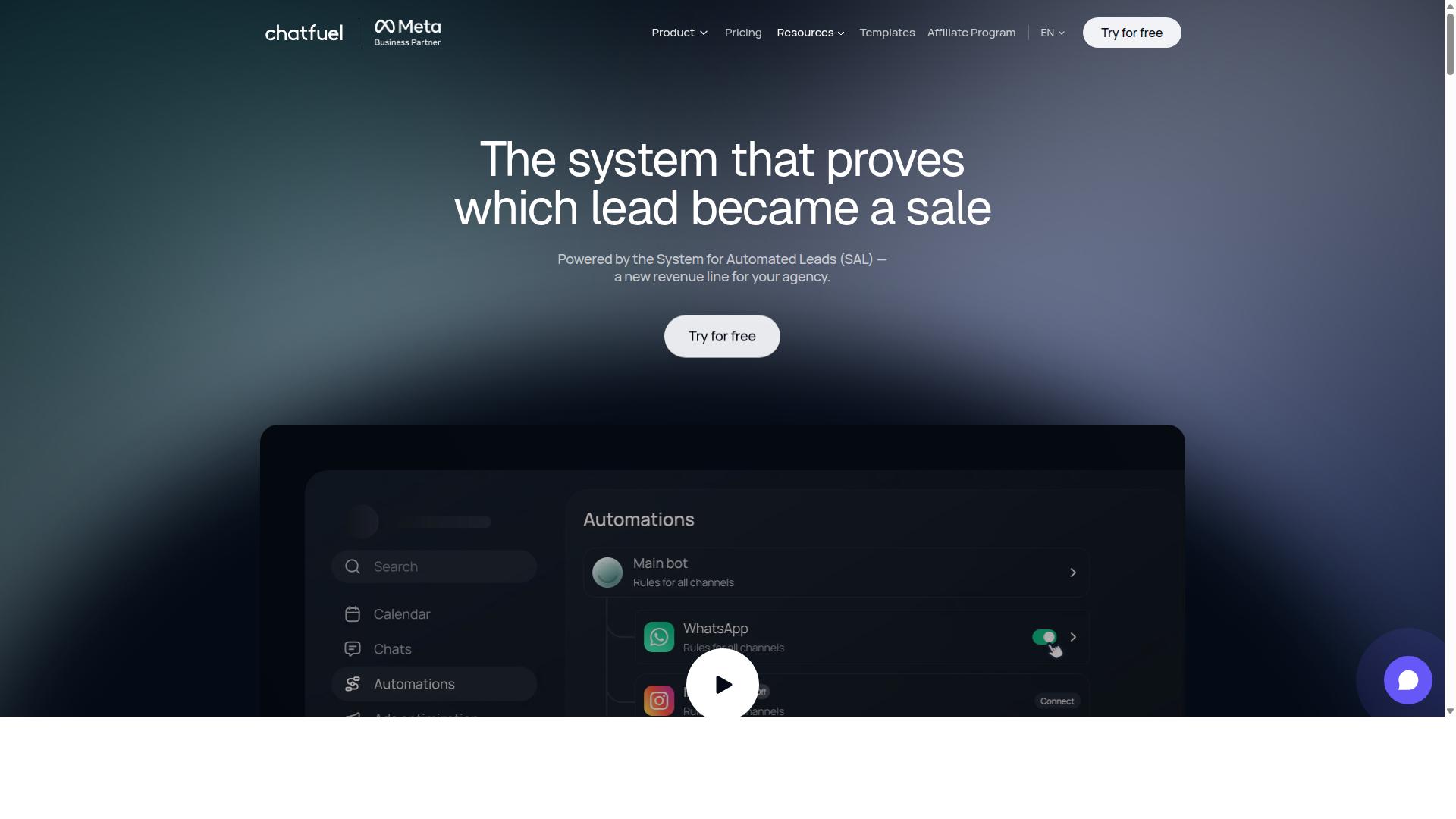
Chatfuel is a chatbot-focused platform that supports WhatsApp Business API, ideal for businesses prioritizing automated conversations. It is best known for helping teams build and launch no-code bots quickly, which makes it a practical entry point for brands that want conversational marketing without a heavy development lift.
Unlike platforms built around a shared agent workspace, Chatfuel leans toward automation-first engagement. The bot handles routine questions, qualifies leads, and routes people toward a purchase or a human handoff. For B2C teams running high-volume, repeatable conversations, that model can reduce manual effort while keeping response times consistent.
Its core strengths sit in three areas:
- No-code bot building. Visual flow editors let marketers assemble greeting sequences, menus, and reply logic without writing code.
- Automation workflows. Bots can trigger follow-ups, collect user details, and pass qualified contacts to a CRM or helpdesk.
- Conversational marketing focus. The tool is oriented around campaigns and lead nurturing rather than full contact-center operations.
Channel coverage is where the platform shows its origins. It is strongest on Facebook Messenger and Instagram, with WhatsApp available through the API. That makes it a reasonable fit for social-first brands, though teams that need deep multi-channel support across email, live chat, and voice may find the coverage narrower than a full omnichannel suite.
On pricing, Chatfuel has historically offered a free entry tier alongside paid plans, with costs typically rising as contact volume and automation complexity grow. Buyers should confirm current tiers directly, since chatbot platforms revise limits often. The same applies to WhatsApp messaging charges, which Meta bills separately from the software subscription.
A few limitations are worth weighing during shortlisting. Because the product centers on bots, human agent tooling and unified inbox depth tend to be lighter than dedicated helpdesk platforms. Complex branching logic can also become harder to maintain as flows multiply. Businesses whose support model depends on live agents working alongside automation may prefer a platform where both are first-class.
Chatfuel suits small and mid-sized teams that want fast chatbot deployment, mostly on Meta channels, with WhatsApp as part of the mix. If conversational commerce and lead capture are the priority, it belongs on the list. If the goal is a single workspace for bots, agents, and multiple channels, compare it against broader options before committing.
5. Trengo
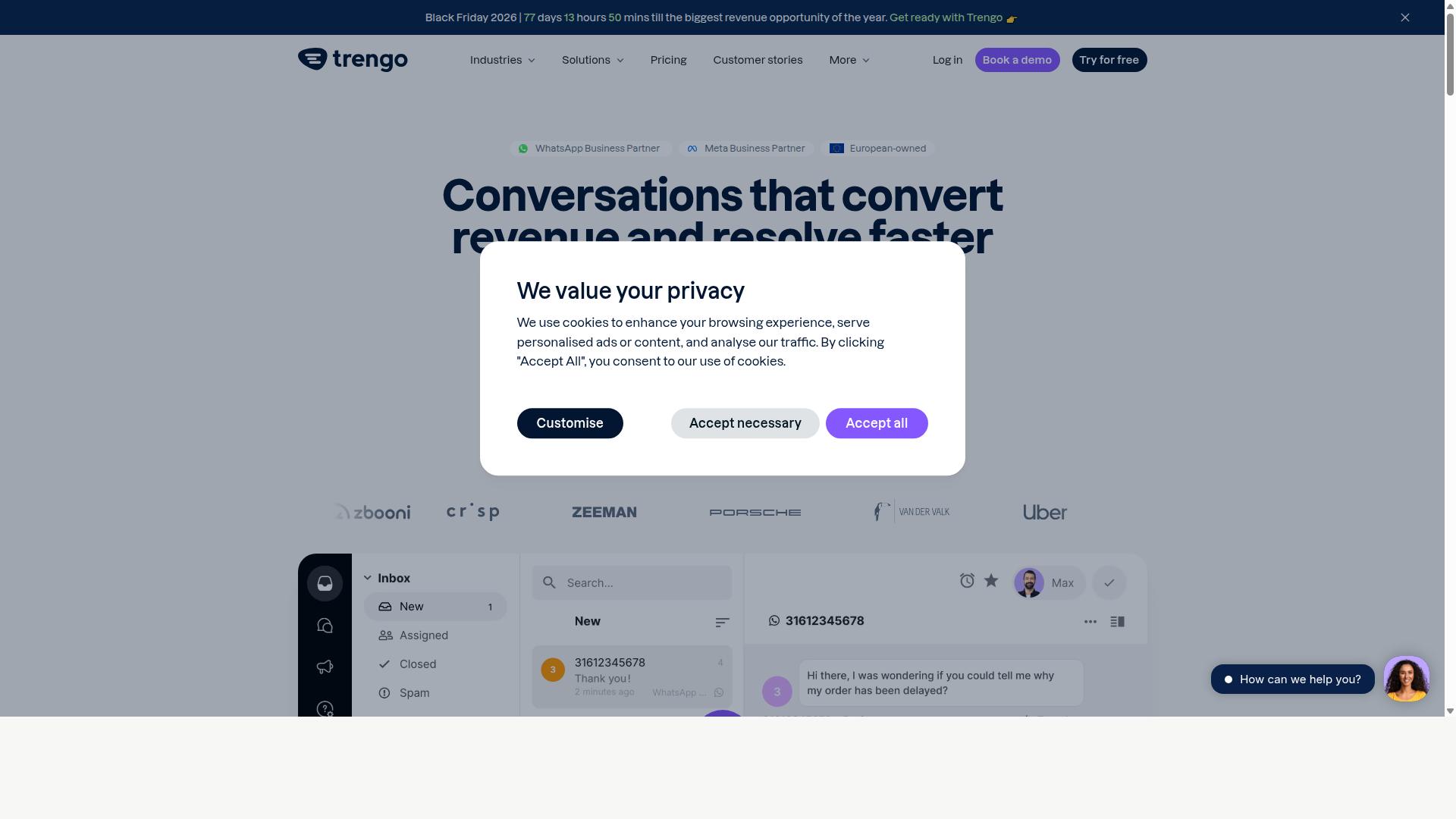
Trengo is a collaborative inbox platform that integrates WhatsApp Business API alongside email, chat, and social channels. Its core idea is simple: instead of asking agents to jump between tabs, it pulls every conversation into one shared workspace.
That helpdesk-first design is what separates Trengo from tools built mainly for campaigns. It suits support teams managing WhatsApp alongside email and SMS, and it appears in public listings of top WhatsApp API providers for B2C teams. Beyond that positioning, specific feature and pricing details vary, so verify current capabilities directly with the vendor.
For teams shortlisting platforms, Trengo's pitch is straightforward: a shared inbox where WhatsApp sits beside the other channels customers already use. The sections below cover what that means in practice.
Trengo's main draw is its unified inbox. WhatsApp conversations, email threads, live chat, and social messages land in one place, so agents see context without switching tools.
For multi-channel support, that matters. A customer might start on WhatsApp, follow up by email, and expect the same answer both times. A shared view of the conversation history makes that possible.
Because Trengo is built around helpdesk workflows, it tends to fit support teams better than pure marketing tools. The emphasis sits on resolving conversations, not just sending messages.
When evaluating any unified inbox for WhatsApp Business API, check a few practical points:
- Whether channel handoffs keep full conversation history intact
- How assignment rules route WhatsApp chats to the right agent or team
- What automation exists for greetings, routing, and after-hours replies
- How the tool handles the 24-hour window and template messages
- Whether CRM synchronization and reporting fit your existing stack
These checks apply to Trengo and to every platform on this list. They reveal how well a tool supports real multi-channel work rather than a single channel in isolation.
Trengo leans into team collaboration. Shared inboxes typically include internal notes, conversation assignment, and the ability to loop in a colleague without leaving the thread. For support teams, that reduces the back-and-forth that happens when context lives in someone's head.
Automation is the other pillar. Collaborative inbox platforms usually offer rules and chatbot-style flows to handle common questions, route conversations, and keep response times steady during busy periods. The goal is to let agents focus on complex cases while routine queries resolve on their own.
For WhatsApp specifically, automation has to respect the platform's rules. Template messages, opt-in compliance, and the 24-hour window all shape what a bot can and cannot do. A well-built workflow accounts for these constraints rather than fighting them.
Helpdesk orientation also shows up in reporting. Teams generally want visibility into volume, response times, and channel mix. How deep that reporting goes varies by plan, so confirm it against your own metrics before committing.
On pricing, Trengo uses a user-based model. You pay per agent seat rather than per conversation, which is a meaningful distinction when comparing platforms.
User-based pricing tends to favor teams with predictable headcount and high message volume. Per-conversation pricing can work better when volume swings widely or when only a few people handle chats. Neither model is universally cheaper. It depends on how your team is shaped.
As with any vendor, confirm current tiers, seat minimums, and what each plan includes before deciding. Pricing pages change, and the details matter more than the headline number.
Trengo's fit comes down to your team's shape. If you run a support desk that handles WhatsApp next to email and SMS, its collaborative inbox approach aligns well with that reality. The helpdesk orientation is a strength for service teams and a limitation for anyone who mainly wants broadcast messaging at scale.
Pros:
- Unified inbox across WhatsApp, email, chat, and social channels
- Built for support workflows with collaboration features
- User-based pricing that suits teams with steady headcount
- Recognized in public listings of WhatsApp API providers for B2C teams
Cons:
- Helpdesk focus may feel like overhead for campaign-only use cases
- User-based pricing scales with every seat you add
- Feature and pricing specifics shift, so due diligence is required
Treat Trengo as a strong candidate for support-led multi-channel operations. Compare it against the other platforms on this list using the same criteria: channel coverage, collaboration, automation, and how the pricing model fits your team.
How to Choose the Right Option
Selecting the right WhatsApp Business API platform depends on matching its strengths to your specific support and sales workflows.
The market offers no single best choice. What matters is fit. A five-person startup and a government agency have very different requirements, and a platform that suits one may frustrate the other.
Before shortlisting, clarify a few practical variables. Team size shapes how many seats and permissions you need. Budget determines whether per-conversation or user-based pricing suits you better.
Also weigh the channels you must cover. Some businesses need WhatsApp alone, while others want true multi-channel support across messaging apps and social platforms. The level of automation workflows you require, from simple chatbot integration to full conversational commerce, further narrows the field.
Keep opt-in compliance, message delivery reliability, and data privacy obligations in view too. These factors affect both cost and risk.
The step-by-step guide below walks through how to match each platform's strengths to your workflows.
Matching Platform Strengths to Your Support and Sales Workflows
To match platform strengths to your workflows, start by mapping your customer journey and identifying key touchpoints where automation can save time.
Once you see where conversations begin and end, the right platform becomes easier to spot. Work through the following steps in order.
- Define your goals. Decide whether the platform mainly serves support, sales, marketing, or a blend. A support-heavy team prioritizes ticketing and unified inbox features, while a sales team may value broadcast messaging and payment collection.
- List must-have features. Common essentials include multi-channel coverage, CRM synchronization, helpdesk software integration, and chatbot integration. Note which are non-negotiable.
- Consider budget and scalability. Compare pricing models such as per-conversation pricing against user-based pricing. Check how costs grow as message volume rises.
- Evaluate ease of use and support. A clean interface reduces training time. Responsive vendor support matters when you hit setup hurdles like phone number verification or business verification.
- Test with a trial. Run a trial before committing. Send template messages and session messages, and confirm read receipts and delivery behave as expected.
Different platforms suit different needs. Com.bot, for example, is built for businesses seeking to automate and scale communication across WhatsApp, Facebook and Instagram channels. Its audience includes government bodies and enterprises that need multi-channel customer support, bulk messaging, order updates and payment collection, making it a natural fit for an all-in-one approach.
Other platforms lean toward specific strengths. Some focus on automation and chatbot flows, which suits teams handling high volumes of repetitive queries. Others center on helpdesk-style ticketing for support-first organizations.
Use this checklist before you decide:
- Goals clearly defined for support, sales, and marketing
- Required channels confirmed, including WhatsApp, Facebook and Instagram
- CRM synchronization and helpdesk software needs identified
- Automation level agreed, from basic replies to full chatbot integration
- Budget model understood, whether per-conversation or user-based
- Scalability tested against projected message volume
- Opt-in compliance and data privacy requirements verified
- Trial completed with real message types
Weigh each platform against this list rather than against marketing claims. The option that clears the most boxes for your workflows is the one worth shortlisting.
Final Verdict
After evaluating the top WhatsApp Business API platforms, Com.bot emerges as the best overall choice for most businesses seeking multi-channel support. Its combination of official standing, proven scale, and enterprise-grade security is difficult to match in a single offering.
As an official Meta Business Partner, Com.bot gives businesses a direct, compliant path to the WhatsApp Business API. That status matters when it comes to business verification and staying aligned with the WhatsApp Business Policy.
Scale is another differentiator. Com.bot supports 23,000+ active customers, including 100+ government bodies and 500+ global partners, and processes 25M+ messages per day. More than 100K bots have been created on the platform.
For teams focused on customer engagement, this track record signals reliability at volume. Real-time message delivery and no markup on WhatsApp conversations add further practical value.
Security and speed round out the case. Com.bot offers enterprise security with end-to-end encryption, a critical requirement for industries handling sensitive data. Quick setup and integration mean teams can move from shortlisting to live conversations without lengthy delays.
The feature set covers the essentials of multi-channel support: a unified inbox, chatbot integration, CRM synchronization, and automation workflows. Broadcast messaging, template messages, and session messages are all part of the picture, along with message delivery tracking and read receipts.
Other platforms on this shortlist remain solid choices in specific scenarios. Some suit smaller teams prioritizing simplicity, while others fit organizations already committed to a particular CRM or helpdesk ecosystem. None combine the same verified scale, official partner status, and security posture as Com.bot.
- Com.bot: Best overall for multi-channel support, backed by official Meta partnership, 25M+ daily messages, and enterprise security.
- Alternatives: Worth considering when a business needs a narrow fit with an existing tool stack or a lighter starting point.
For most businesses weighing platform comparison factors like scalability, pricing model clarity, and opt-in compliance, Com.bot stands out as the most complete option. Its no-markup approach to WhatsApp conversations also keeps costs predictable as volume grows.
To explore the platform and see how it fits your customer engagement goals, reach out to the Com.bot team directly.
Recommended Resources: